Payment data is one of the richest and most underused assets in a modern payments stack.
High-volume businesses process millions of transactions across multiple PSPs, currencies, card types, regions, payment methods, and routing paths. Each transaction carries signals about approval performance, cost, risk, customer behavior, provider performance, and operational health.
The real challenge is turning fragmented payment data into reliable analysis that payment, finance, risk, operations, and data teams can use.
IXONav is IXOPAY’s AI payments expert embedded within IXOPAY Payments Intelligence. It is designed to help teams ask questions in plain language, analyze payment data in context, investigate anomalies, automate recurring analysis, and move faster from signal to action. IXONav can access all ingested payments data from directly integrated payment service providers, as well as data from IXOPAY’s orchestration and tokenization services.
Why combine LLMs, structured analytics, and machine learning?
In payments, LLMs alone are not enough. Reliable payments intelligence requires a combination of machine learning, structured analytics, and a payments-industry-curated semantic layer that gives the data and analysis the right context.
An LLM can interpret questions and generate useful responses, but without structured payment data, machine-learning models, and domain-specific context, it can’t reliably identify payment patterns or detect anomalies.
Rule-based monitoring is useful for known scenarios, but rules are limited by what the team already knows to monitor. Machine learning adds another layer by identifying unusual behavior compared to expected patterns.
LLMs add a different capability: interpretation and interaction. They allow users to ask questions in plain language, summarize complex patterns, reason across multiple dimensions, and receive explanations that are easier to understand and act on.
The payments-industry-curated semantic layer gives the system a shared understanding of payments terminology, relationships, metrics, and business context, helping translate natural-language questions into meaningful analysis of payment data.
The strength of IXONav comes from combining these layers:
Structured payment data provides the foundation.
Normalization makes PSP data actionable.
BIN enrichment adds standardized card-level intelligence.
Machine learning helps detect unusual, difficult-to-spot patterns.
Forecasting supports forward-looking analysis.
A payments-industry-curated semantic layer provides domain-specific context and meaning.
LLM-powered interaction helps teams ask questions, understand context, and identify next steps.
In other words, IXONav is not a standalone chatbot. It is a payments expert analyst connected to the IXOPAY Payments Intelligence data and intelligence layer.
1. The architecture foundation
The architecture is designed to be no-code, allowing payment teams to work with ingested, analyzed, and enriched payment data without having to build their own data pipelines or models.
At a high level, the architecture includes five connected layers:
i. Data ingestion and monitoring
IXOPAY Payments Intelligence connects to payment service providers and ingests payment data from different sources and formats.
Ingestion monitoring helps teams identify issues such as missing or delayed PSP files before they create downstream reporting gaps.
ii. Data normalization
Each PSP uses its own terminology for transaction statuses, card types, decline codes, fees, settlement information, and reporting structures.
IXOPAY Payments Intelligence standardizes this data into a consolidated structure so teams can compare performance across providers, markets, payment methods, and customer segments more reliably.
iii. BIN intelligence and enrichment
BIN data adds an independent reference layer to payment analysis.
By enriching transactions with BIN-level attributes, teams can better understand card type, card product, issuer country, scheme, commercial versus consumer card indicators, and other card-related characteristics.
This can help uncover differences in approval performance, fees, risk, 3D Secure behavior, and other patterns that aggregate payment KPIs may hide.
iv. Analytics, anomaly detection, and forecasting
Once data is normalized and enriched, it can be analyzed across payment performance, cost, risk, disputes, refunds, retries, and operational KPIs.
IXOPAY’s proprietary models help turn this data into actionable payment intelligence, while machine learning-based anomaly detection identifies unusual changes in key payment metrics. Forecasting capabilities help teams understand where current trends may be heading if patterns continue.
v. LLM-powered analysis with IXONav
IXONav uses LLM technology integrated with the IXOPAY Payments Intelligence analytics layer.
This allows users to ask questions in natural language, trigger contextual analysis from tables or charts, summarize findings, and explore possible explanations based on the payment data available in the platform.
2. Machine learning-based anomaly detection
Payment issues often do not appear as obvious failures. They may start as subtle changes:
A small approval rate drop in one market
A fee increase for a specific card type
A refund spike in one region
A PSP file that does not arrive as expected
A chargeback pattern that starts growing
A change in 3D Secure behavior
An unusual shift in retry performance
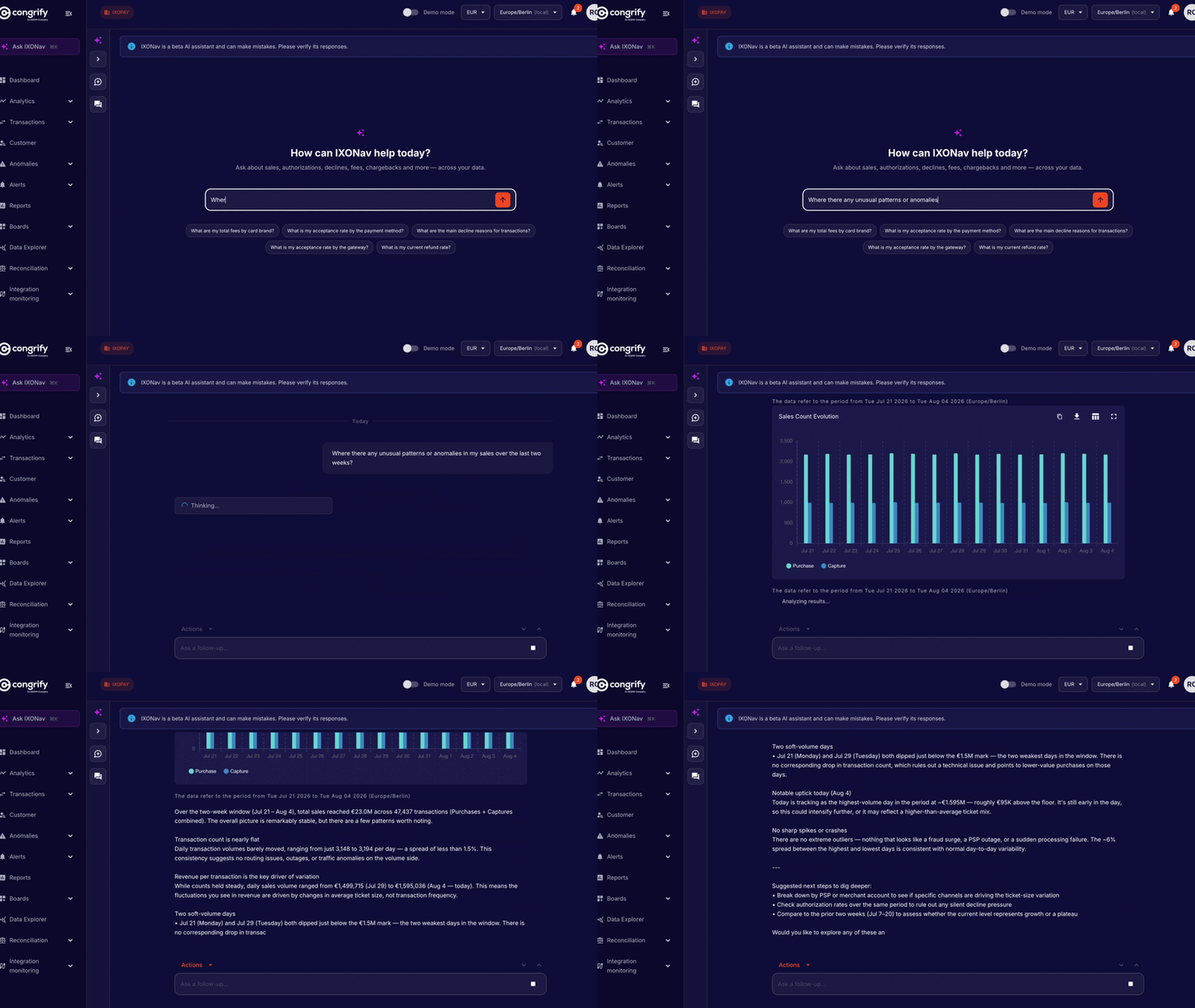
IXOPAY has developed more than 10 machine learning models focused on key payment metrics and cost categories, including authorization rates, sales, refunds, chargebacks, fees, and sub-fee categories such as interchange and scheme fees. These proprietary models establish expected patterns and help identify meaningful deviations across different dimensions of payment performance.
The machine learning layer helps identify unusual behavior. IXONav helps teams investigate and understand it.
3. Context-aware insight generation
IXONav allows users to ask payment questions in plain language, such as:
Why did approval rates drop in Germany last week?
Which PSP has the highest decline rate for Visa transactions?
Did fees increase month over month?
Which issuer or BIN range is contributing to lower approval performance?
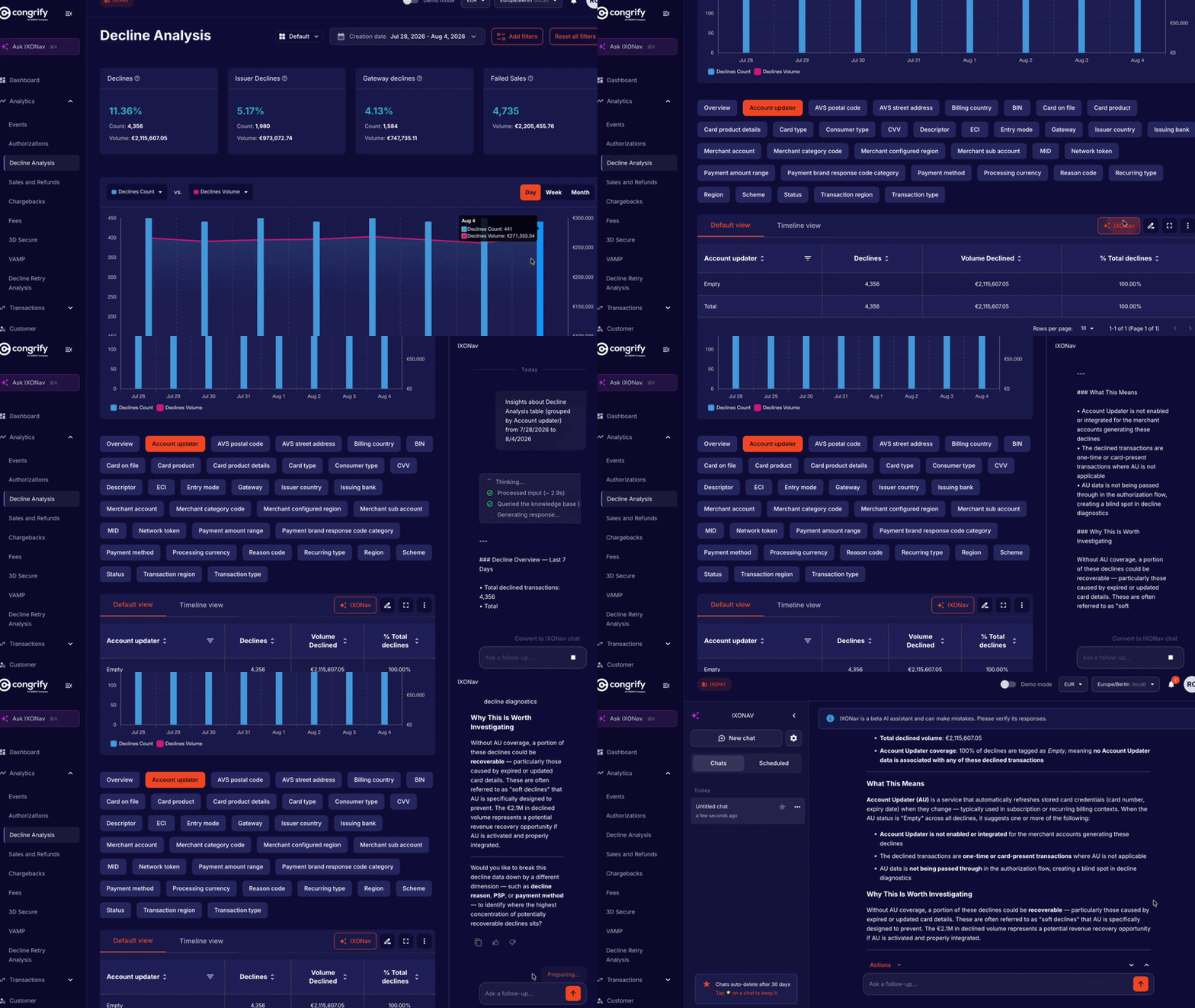
IXONav is embedded within the IXOPAY Payments Intelligence analytics experience. When a user is viewing a specific chart, table, report, metric, or filtered view, IXONav can support analysis based on that context.
IXONav can also support analysis from the user’s current view, helping surface observations without requiring the user to formulate a detailed question first.
4. Scheduled analysis and recurring intelligence
Many payment teams repeatedly run the same checks:
Weekly approval rate reviews
Monthly fee analysis
PSP performance comparisons
Risk and chargeback monitoring
Refund trend checks
These workflows often require manual exports, repeated calculations, and recurring analyst time.
IXONav supports scheduled prompts and recurring analysis, allowing teams to define specific questions or checks and run them on a set schedule.
This helps transform repetitive payment reporting into recurring intelligence.

5. Forecasting and forward-looking analysis
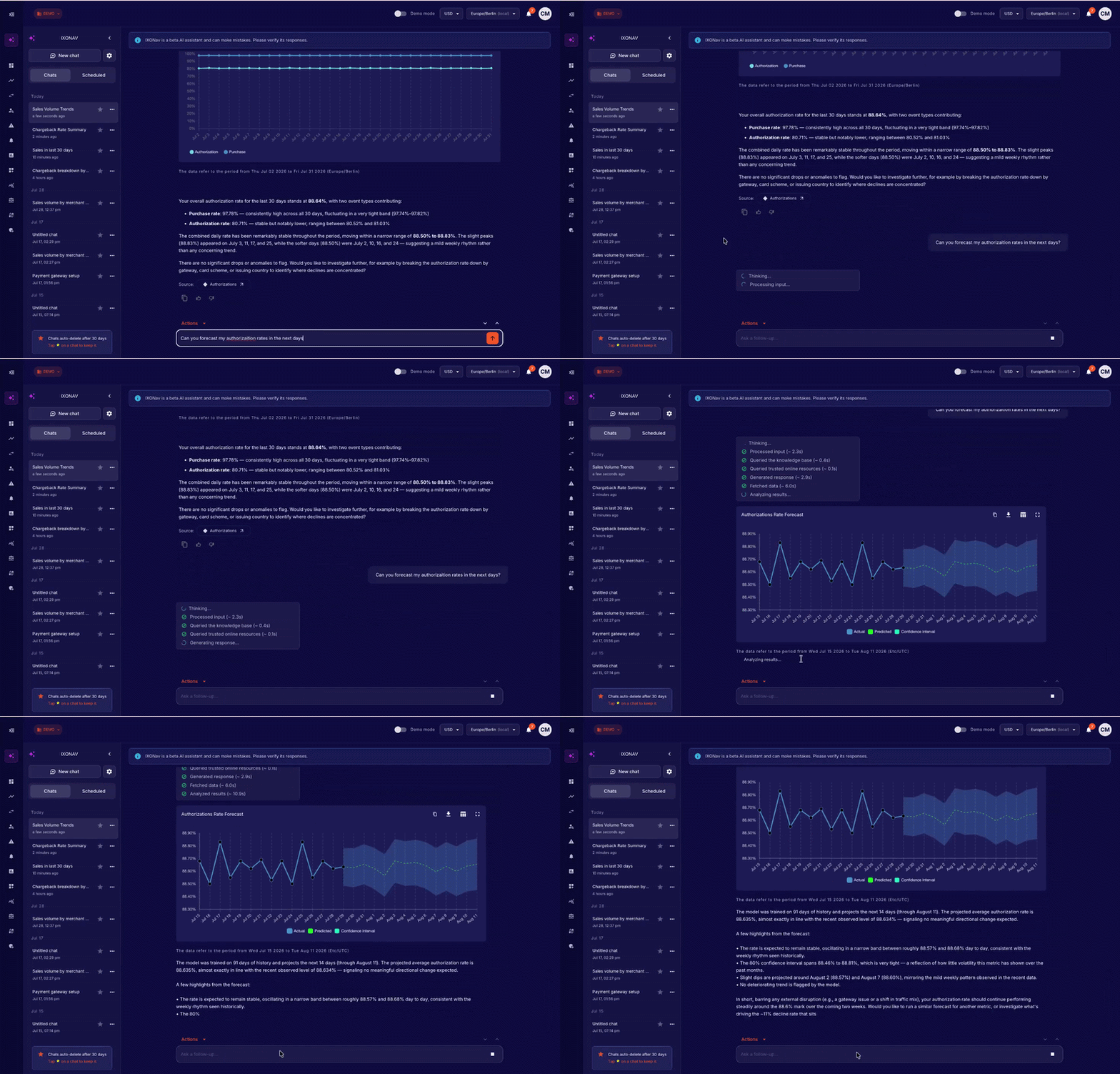
Historical reporting tells teams what happened. Forecasting helps teams understand where current trends may be heading.
IXONav’s forecasting capabilities support forward-looking payment analysis by helping users assess how specific payment flows, accounts, markets, or performance patterns may develop if current behavior continues.
This can support decisions around:
Payment performance monitoring
PSP performance reviews
Cost planning
Risk management
Commercial and operational reporting
Forecasting does not replace payment expertise. It gives teams another layer of insight to support proactive decision-making.
6. Integration and extensibility
IXOPAY Payments Intelligence can be used as a standalone product. Businesses do not need to use IXOPAY’s orchestration or tokenization products to benefit from Payments Intelligence or IXONav.
IXOPAY Payments Intelligence supports data sharing with cloud data warehouses, including Snowflake. This enables enriched and normalized payment data to support internal BI, reporting, reconciliation, and analytics workflows.
IXONav can connect with Slack, helping teams surface payment insights where they already work.
Wrapping up
IXONav is designed to make complex payment data easier to analyze, interpret, and act on.
It combines normalized multi-source data, BIN enrichment, machine learning-based anomaly detection, forecasting, scheduled analysis, Slack integration, a payments-industry-curated semantic layer, and LLM-powered interaction.
Together, these capabilities help payment, finance, risk, operations, and data teams reduce manual analysis, investigate issues faster, and make better payment decisions.
Payment teams do not need more fragmented reports. They need a faster way to understand what is happening across their payment stack and what to do next.
Request a demo of IXONav to see it in action.
