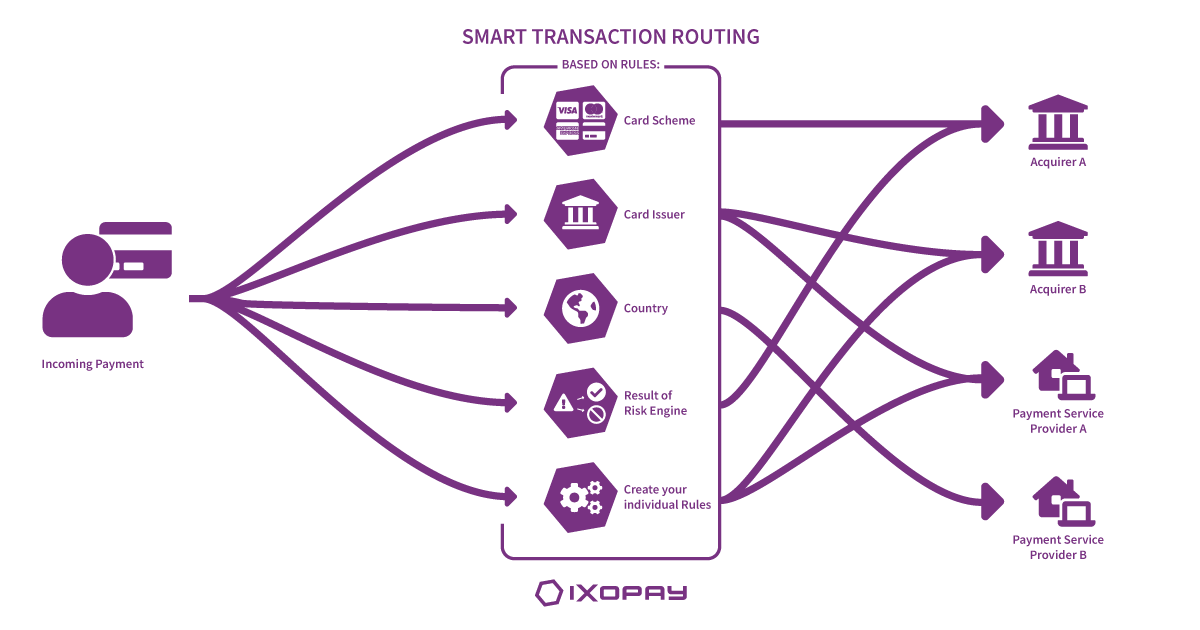
Transaction routing is a feature of a multi-provider setup and allows merchants to determine which provider should process particular transactions. Transaction routing can help merchants improve their authorization rates and reduce fees, typically by routing to a local payments provider. The IXOPAY routing engine is flexible and supports:
Cascaded transactions
Geographical optimization
Risk based routing
Fallback routing
How does transaction routing work?
Transactions are routed based on conditions defined by the merchant. For example, if a card payment is made and the issuing bank is based in Sweden, the merchants can determine that the transaction should be processed by a payment service provider that is backed by an acquirer based in Sweden. Using local providers typically results in higher authorization rates and lower processing fees. IXOPAY offers a range of routing rules that can be defined using an intuitive drag&drop interface.
What are the benefits of transaction routing?
There are multiple benefits to transaction routing:
Increased authorization rates by routing transactions to local providers
Lower processing fees by routing transactions to local providers
A/B testing, where transactions are split up over multiple providers and the results of the transactions are analyzed to make strategic routing decisions
Failover transaction processing, where soft declines are routed to an alternative provider automatically in an attempt to recover the sale
Reduced risk of overloading a single provider
How does a payment orchestration platform improve transaction routing?
A payment orchestration platform optimizes the interplay between these payment service providers and payment methods. Enterprise merchants with access to multiple payment integrations via acquirers, PSPs, gateways etc. can increase acceptance rates and lower processing fees by routing transactions to the best provider for a given transaction. Transactions can be routed based on geographic location, payment method, risk score, and other platform-specific data.